

Character of the stage
Formation here depends on a short rhythm and a safe atmosphere so the child can discover self without pressure or complexity.
Official reference for formation and shared identity
This system is built on progressive education, small groups, scout symbols, rituals, leadership, and learning by doing until values become a lived daily practice.
Progression
From discovery to leadership and service.
Small group
Living learning and shared responsibility.
Shared identity
Symbols, songs, and a collective memory.
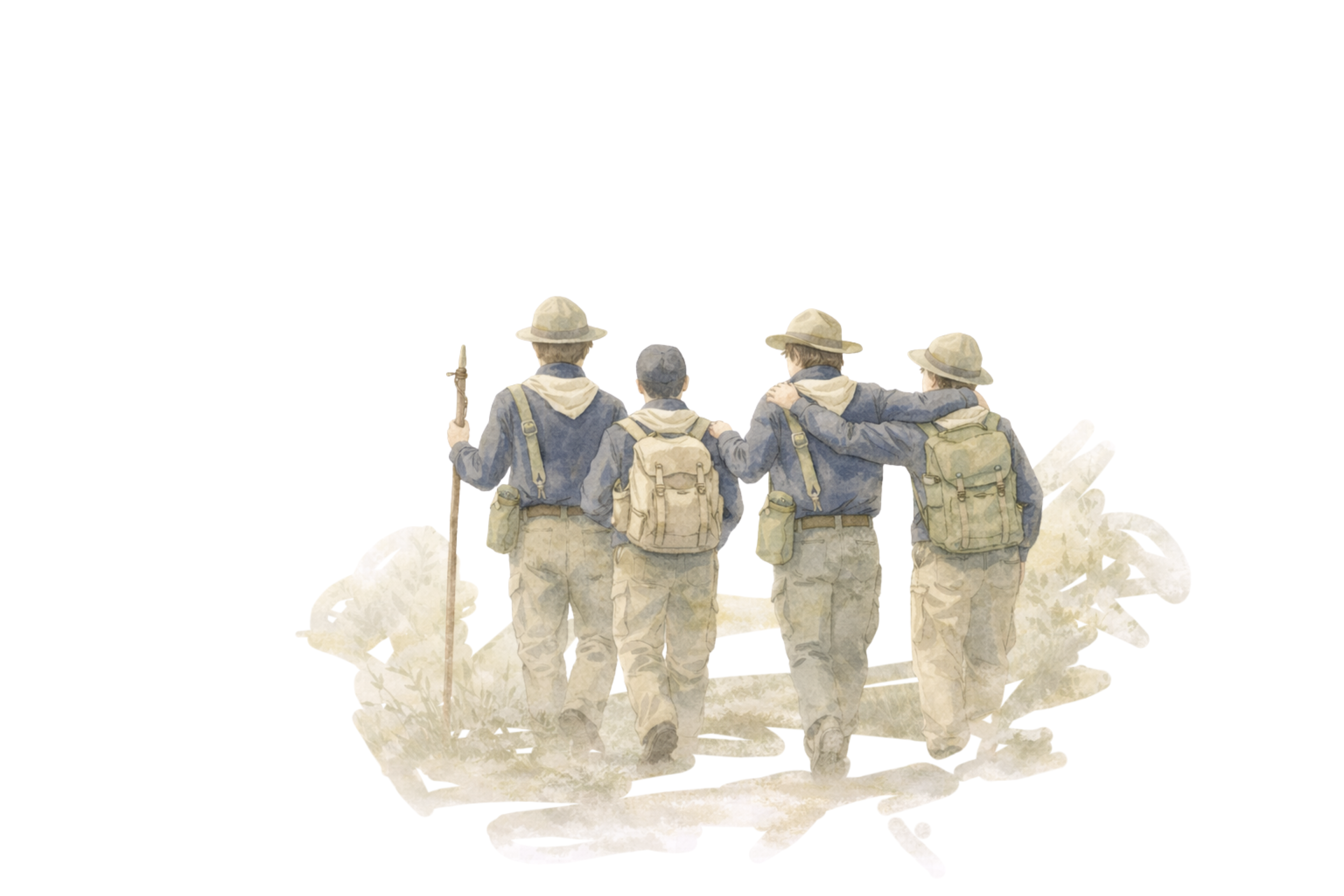
Official identity
Scouts Maison de La Paix
A reference page that presents the structure of the scout system, its stages, its rituals, and the memory that shapes the spirit of the group.
Scouts Maison de La Paix
Progression, belonging, service, and leadership are not separate compartments. They are connected threads in the formation of a scout.
A supportive credibility presence within the wider Moroccan scouting space.
Scout stages
Each young member progresses through connected stages that respect psychological, social, and cognitive growth, and give every age its own tools and fitting responsibilities.
Discovery
Responsibility
Leadership
Service

A bright beginning where the child learns order, confidence, and belonging through play, imagination, and direct experience.
View details
A stage where self-reliance widens and the patrol system becomes a daily frame for learning by doing and taking responsibility.
View details
A stage where leadership becomes more visible and planning, evaluation, self-discipline, and organized work enter everyday formation.
View details
A stage of conscious service and mature commitment where scout identity becomes a practical project of leadership, giving, and accompanying younger generations.
View detailsA bright beginning where the child learns order, confidence, and belonging through play, imagination, and direct experience.
Unit
Pack
Small group
Six
Leader
Six leader / head of the six
Scarf color
Yellow
Formation here depends on a short rhythm and a safe atmosphere so the child can discover self without pressure or complexity.
The six gives each child a clear place in a small group where listening, waiting, helping, and sharing a role are learned in a concrete way.
Every small success in this stage lays an emotional foundation that prepares the child for wider responsibilities later.
A stage where self-reliance widens and the patrol system becomes a daily frame for learning by doing and taking responsibility.
Unit
Troop
Small group
Patrol
Leader
Patrol leader and assistant
Scarf color
Orange
The young scout learns that the group is not only a place to belong but a daily school for initiative, decision, and living the scout law in practice.
The patrol lets the patrol leader and assistant emerge naturally, turning leadership from an idea into a role lived by everyone through rotation and support.
This stage makes the member more self-reliant, more ready for commitment, and clearer about what responsible belonging means.
A stage where leadership becomes more visible and planning, evaluation, self-discipline, and organized work enter everyday formation.
Unit
Advanced unit
Small group
Patrol
Leader
Patrol leader
Scarf color
Red
The patrol moves here from تنفيذ tasks to co-shaping the program, proposing initiatives, and carrying the results of collective choices.
A patrol leader does not lead by commands alone, but by example, wise distribution of roles, and the ability to gather people around a clear goal.
Every successful leadership experience in this stage prepares the member for rovering with a wider spirit of service, commitment, and civic responsibility.
A stage of conscious service and mature commitment where scout identity becomes a practical project of leadership, giving, and accompanying younger generations.
Unit
Clan
Small group
Crew
Leader
Crew leader
Scarf color
Blue
Later leader colors: olive green + red.
The clan is not only a final stop. It is where what was learned earlier is translated into useful service, responsible planning, and meaningful presence inside and outside the association.
The crew makes space for mature friendship built on loyalty, sincerity, and shared service, with greater capacity for dialogue and initiative.
When a member matures in formation and fieldwork, moving into leader responsibilities becomes a natural continuation of the path rather than a separate jump.
Units and small groups
The scout system distinguishes between the larger unit that frames the stage and the small group where daily learning, direct responsibility, and team spirit are lived.
| Stage | Unit | Small group | Members | Leader | Scarf color |
|---|---|---|---|---|---|
| Cub Scouts and Brownies | Pack | Six | 5 to 6 | Six leader / head of the six | Yellow |
| Junior Scouts and Guides | Troop | Patrol | 4 to 8 | Patrol leader and assistant | Orange |
| Advanced Scouts and Rangers | Advanced unit | Patrol | 4 or 8 | Patrol leader | Red |
| Rovers and Guides | Clan | Crew | 4 to 8 | Crew leader | Blue |
The first organized experience of belonging inside the pack.
The six introduces role-sharing, patience, and supportive cooperation in a reassuring environment.
Open naming and traditionsThe basic working unit inside the troop, where shared responsibility becomes concrete.
The patrol makes challenge, decision, and role-sharing part of everyday scout life.
Open naming and callsA more advanced leadership frame inside the advanced unit.
The patrol becomes a nucleus of emerging leadership, planning, and conscious execution.
Open naming and callsA mature small group inside the clan, centered on service and loyalty.
The crew becomes a space for conscious companionship, community initiative, and preparation for leadership and mentoring.
Open meanings and callsNaming and calls
Names and calls build the inner identity of each small group. They distinguish it, unite its members around a shared rhythm, and carry a simple educational meaning.
Naming and calls
Sixes usually use color names so the child can distinguish them easily and build an early, memorable identity.
Color here is a simple but effective sign. It gives the child a clear belonging and a group with a name, a voice, and a place.
Calls are best kept short, easy to repeat, and tied to movement, smiles, and clarity more than verbal complexity.
Naming and calls
Patrols often take animal names because they carry clear qualities that help build a strong mental image for each group.
The chosen animal points to a quality the stage wants to reinforce: disciplined speed, high aspiration, guided strength, or focused work.
Each patrol can connect its name to a small visual emblem or a shared line that appears in gatherings, contests, and common missions.
Naming and calls
This stage fits more contemporary scout-leadership names such as Resolve, Flame, Horizon, or Steadfastness because they carry strength, progression, and cohesion.
These names underline that the patrol is no longer only an activity team. It is an emerging leadership cell that works well, measures its impact, and protects its internal cohesion.
A call in this stage should carry a firmer rhythm and connect discipline, capability, and steady progress.
Naming and calls
Crews often choose names with religious, historical, or civilizational weight such as Al-Andalus, Kairouan, Trust, Victory, or Witnessing so the name reflects the depth of the mission.
The name gives the crew a civilizational and ethical depth and reminds its members that rovering is not just an activity but a path of awareness, responsibility, and service.
Every crew call should emphasize sincerity, loyalty, and service and stay away from empty grand language in favor of weight and clarity.
Symbols, rituals, and shared identity
Symbols and rituals give scouting its special language. They organize beginnings, frame transitions, strengthen emotion, and make belonging visible in behavior, gesture, and atmosphere.
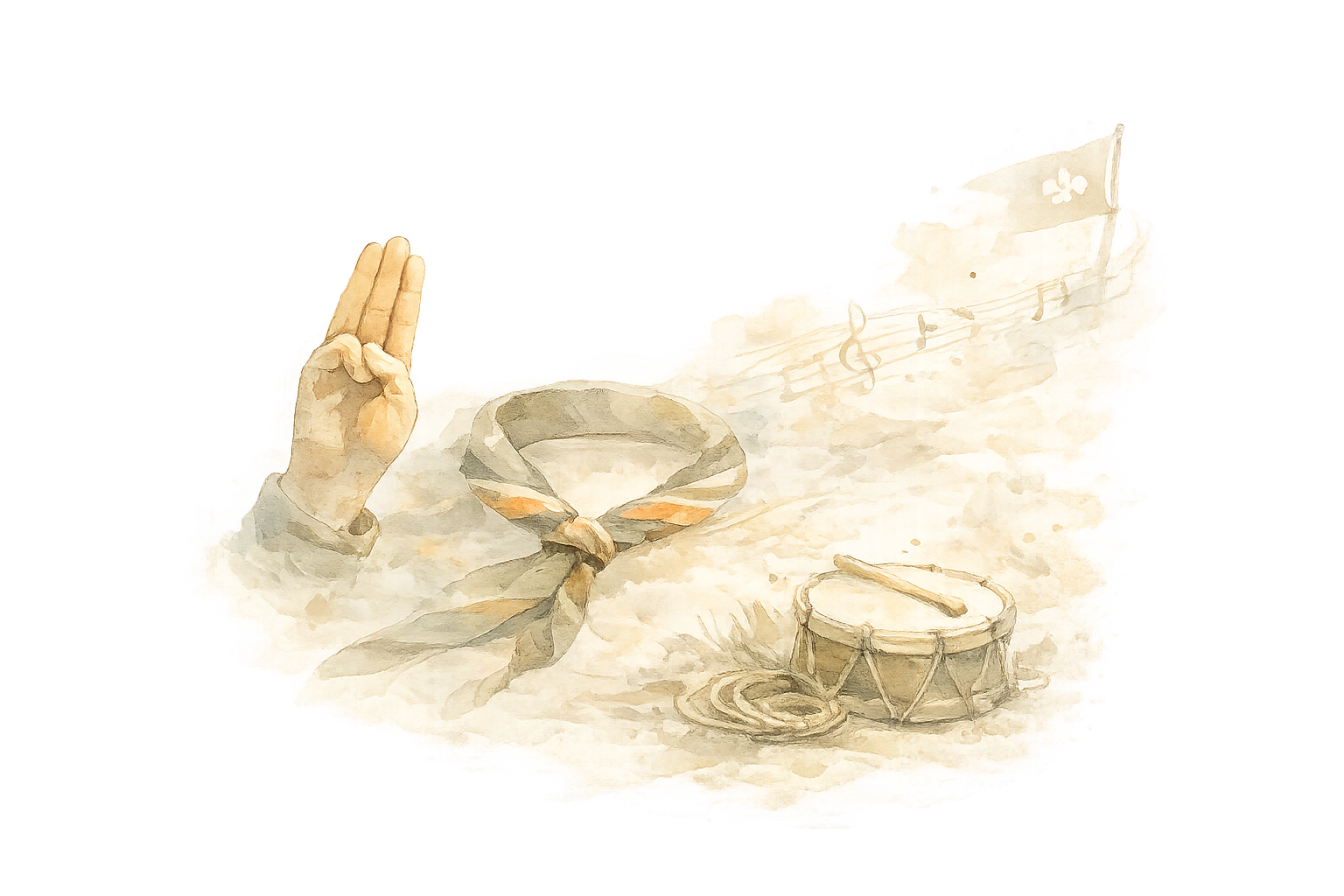
Shared identity that goes beyond words
From flag raising to the campfire circle, recurring scout scenes become part of memory and shape how a member understands the group.
A good ritual makes respect visible in posture, salute, and listening.
Organized symbols turn a collective moment into a practical exercise in attention and commitment.
Repeated symbols create an emotional memory that survives from one season to the next.
A formal opening that links the activity to order and belonging and gives the group a shared beginning for the day or the occasion.
Flag raising reminds the member that the activity is not an isolated personal act but part of a shared framework governed by values, respect, and discipline.
It appears in openings, camps, official gatherings, and activities that need a clear beginning to common work.
It teaches orderly standing, attentive listening, respect for symbols, and linking enthusiasm with disciplined behavior.
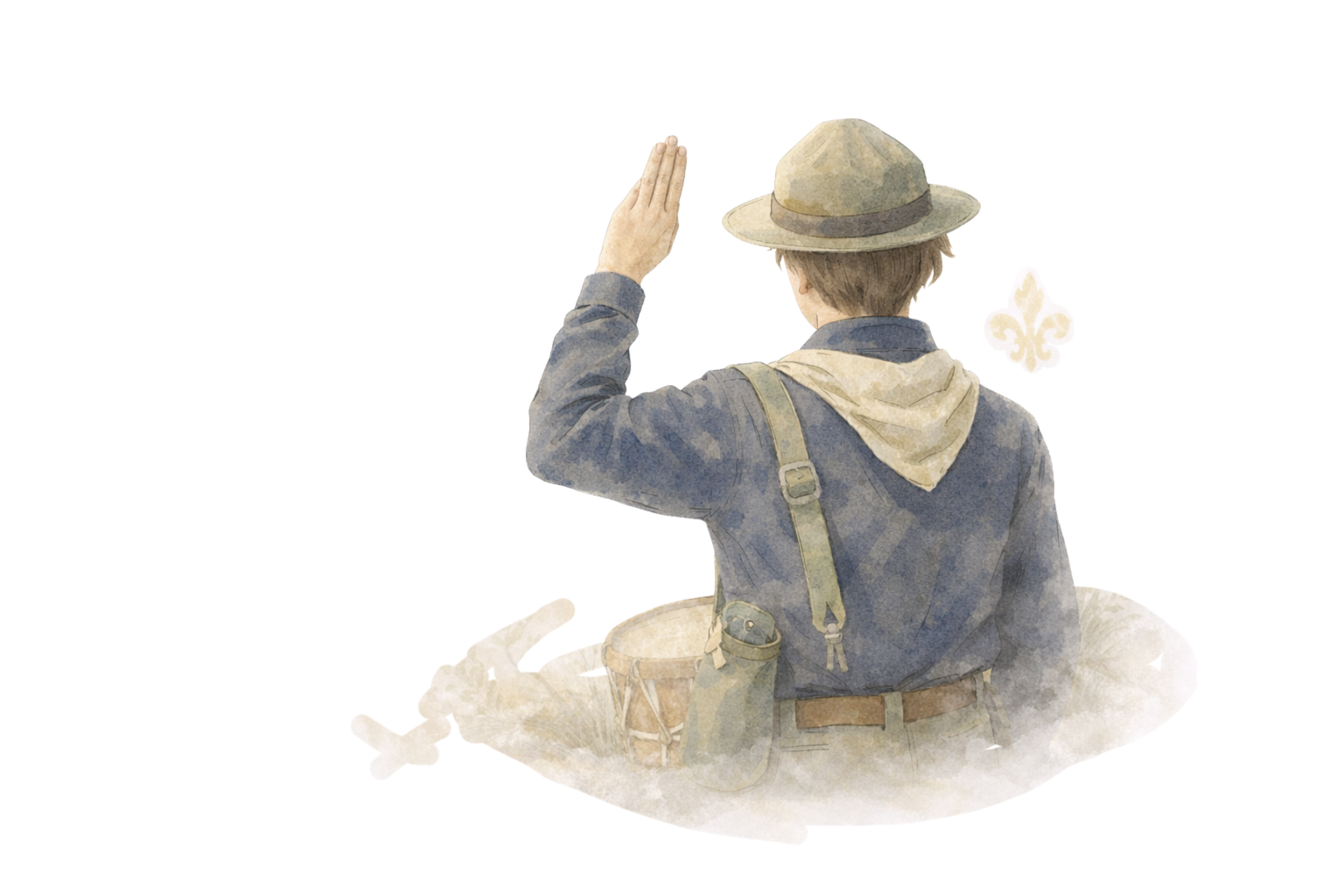
A sign of respect, belonging, and self-control that carries the meaning of commitment more than outward formality.
Used in close daily situations inside scout life when the aim is to show respect, readiness, and discipline.
Appears in more formal moments such as flag raising, the promise, acceptance, or stage advancement ceremonies.
The salute carries mutual respect and belonging to a group with a law and a mission, and it educates body control and conscious presence.
A unified educational identity that declares belonging, condenses the meaning of order, and connects the individual to the group and its formation path.
The scout uniform is not a simple appearance. It is a sign of belonging and a readiness to represent the group with appropriate and disciplined behavior.
The identity remains one while some details change with age, unit, and role. Scarf color remains one of the clearest visible markers.
The uniform strengthens equality, reduces superficial differences, and connects personal behavior with the association's public image.
A personal and public commitment to scout values and conduct, joining words to practice and making belonging a conscious responsibility.
The promise is the moment when the member states readiness to commit to the values, principles, and behavior expected by the scout group.
It makes commitment clear and audible in front of the group so the member feels that words carry weight and belonging is not superficial.
The promise should not remain a memorized line. It becomes a daily reference in situations, decisions, service, and relations with others.
A formal moment of transition that gives each stage its value and helps the member feel that progress is part of a clear educational path.
It announces the member's entry into the group in an ordered educational way and gives a strong feeling of welcome, belonging, and commitment from the beginning.
It documents movement between stages while preserving the meaning of earlier effort and opening the horizon of new responsibilities without breaking continuity.
It teaches that growth has stations, that progression is central to scouting, and that every move forward comes with new maturity and a new charge.
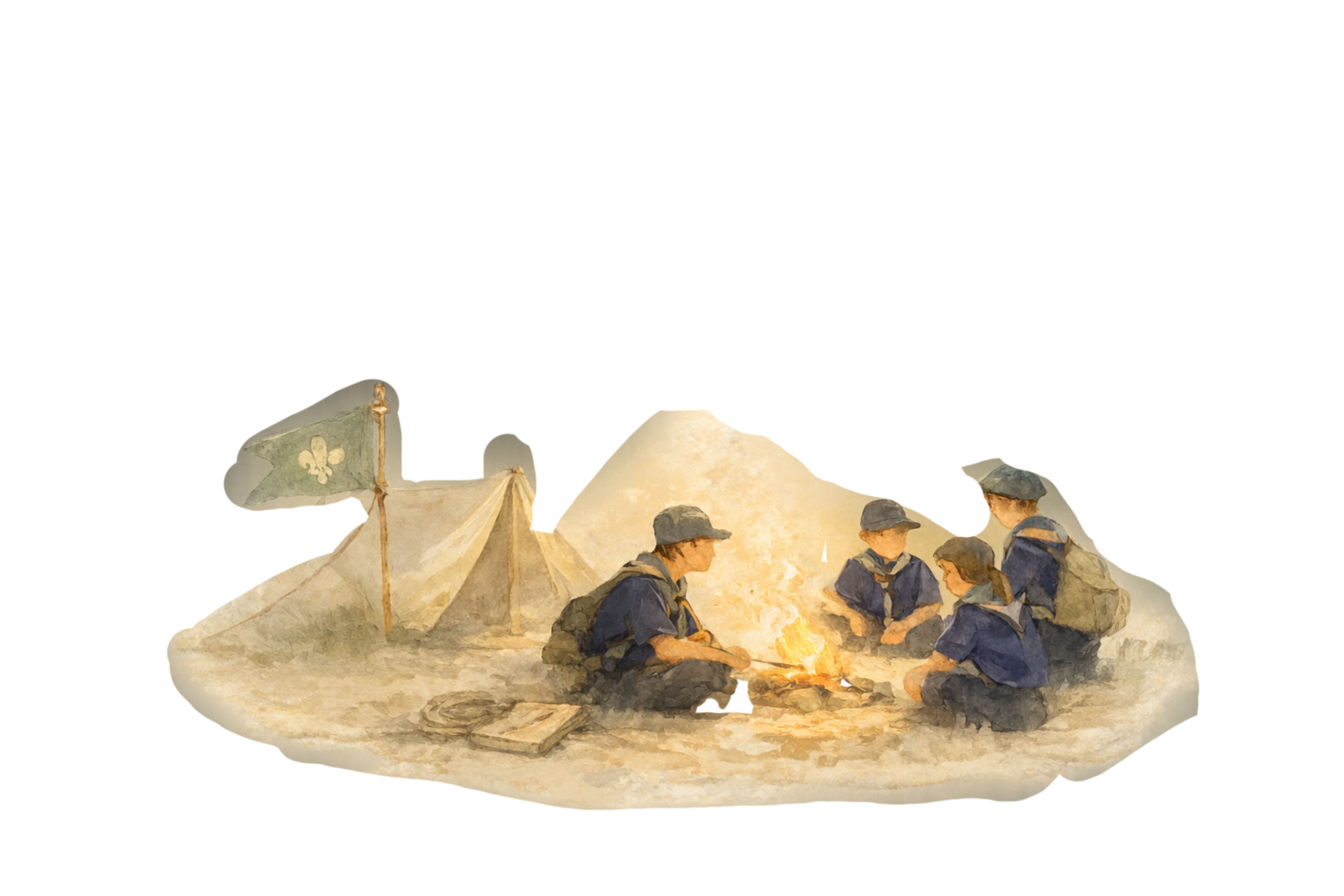
An emotional and educational evening that gathers storytelling, singing, performance, evaluation, and memory-making inside the group.
The campfire brings together material warmth and emotional warmth, letting the group express itself through voice, presence, and collective creativity.
It can include songs, short pieces, sketches, calls, and moments where members exchange joy, appreciation, and evaluation.
Campfire nights often stay among the strongest memories because they condense group life, joy, and belonging into one shared image.
Songs and shared identity
Songs in scouting are not decorative. They are a central part of emotional and educational formation, shaping shared tone, memory, and collective feeling.
The official anthem becomes the voice of the association in gatherings, celebrations, and public representation.
Each stage has its own rhythm, suited to the age of the members while remaining tied to the wider scout identity.
Voice in scouting is not an accessory. It is a method of education, presence, and collective feeling.
Repeated songs, calls, and campfire moments build a memory that returns every season.
This area is ready for the official anthem text or an approved audio player so the page can remain a single reference point for the association.
Ready to be inserted
Official lyrics · Audio recording · Links to collective performance
System philosophy
The scout system rests on learning by doing, calm progression, the small group, leadership, service, and belonging. It is a path that builds character, strengthens responsibility, and increases a member's ability to understand self, live with others, and serve the community.
Official closing
The scout system of Scouts Maison de La Paix is not only an organizational chart. It is a complete educational path that shapes the member's character and prepares them for leadership, service, and belonging.
Return to the beginning of the path